Translation as Hospitality: Welcoming Fringe Audiences Without Losing the Original Voice
SurtitleLive is now Pockitle Cue.
SurtitleLive began from a problem I understood as a playwright working across languages.
Not from a software category.
Not from a market gap.
From a question that kept returning whenever a story crossed from one language environment into another:
How can a performance keep the language it was born in, while giving another audience a real way to follow it?
In August 2025, I met a Ukrainian writer in Canada.
We came from different places and different languages, but we were struggling with a similar question. A story can be clear, urgent, funny, painful, and alive in one language, and still become distant the moment it meets an audience who cannot follow that language.
It was not only a technical question.
Of course there were practical problems: translation, surtitles, timing, screens, rehearsal time, and the limits of small touring teams. But underneath those production details was something more fragile.
If we translate too much, do we flatten the voice of the work?
If we translate too little, do we leave the audience outside the door?
For a non-English show going to the Edinburgh Fringe, the question is often framed in a practical way:
How do we add English surtitles?
But the deeper question is more human:
How do we invite English-speaking audiences into the work without giving up the language that made the work possible?
The Fringe was built for stories from the edge
The Edinburgh Festival Fringe has always carried work that arrives from outside the centre. Its own history begins in 1947, when eight theatre groups came to Edinburgh without being part of the official International Festival programme and performed anyway.
That origin matters for non-English companies.
The Fringe remains an open-access festival. It is a place where artists from different countries, traditions, genres, and languages can bring work into rooms that may not already share their cultural context. A show may arrive in Edinburgh carrying a language, rhythm, and memory that local audiences do not know in advance.
That is not a weakness.
It is one of the reasons the Fringe matters.
The issue is not that the work is in another language. The issue is whether the audience has been given a clear doorway into it.
Language is not a problem to erase
When a non-English show prepares for the Fringe, English surtitles can easily be treated as a conversion job: turn the show into English so more people can consume it.
That is the wrong starting point.
The original language is not packaging. It is part of the performance.
It carries breath, register, timing, politeness, anger, silence, playfulness, social pressure, and cultural memory. A line can be translated accurately and still arrive with a different weight. A joke can become understandable and still lose its rhythm. A phrase can become clear and still lose the relationship that made it theatrical.
English surtitles should help the audience enter the work.
They should not make the work feel as if it has abandoned its own voice.
That is the difference between translation as replacement and translation as hospitality.
Hospitality does not ask the guest to become the host. It gives the guest a way to enter the room.
For theatre, that means the audience can understand enough to stay emotionally present while the original language remains alive on stage. They hear the actors’ voices. They feel the rhythm of the language. They read the English as a bridge, not as a substitute for the performance.
That bridge is made by people. A translator needs context, authority to question a line, time to see the work in rehearsal, and clear credit for the language the audience will read. “Human review” should not mean asking someone to approve an anonymous machine draft at the last minute. It should mean that a responsible language-maker can shape the text with the production.
Hospitality also requires precision about the service. Translated surtitles can open a work to people who do not understand the spoken language. Accessibility captions may need speaker identification, sound effects, music, and off-stage sound as well. Calling every text track “accessible” can hide what an audience will actually receive.
English surtitles are an invitation, not a replacement
For many non-English Fringe companies, English surtitles are the first practical doorway. They help local audiences, reviewers, programmers, and visitors follow a work they might otherwise avoid because they are afraid of being lost.
But English should not always be the only doorway.
Some audience members may need the original language visible because that is how they stay close to the work’s cultural texture. Some touring partners may need another prepared language. Some international guests may read a third language more comfortably than English. A co-production may want one performance to support more than one cultural route into the same piece.
If every version is forced onto one shared screen, the design quickly becomes crowded. Nobody gets the best reading experience. The English becomes shorter than it should be. The original language becomes tokenistic. Additional languages become almost impossible.
This is where per-device language choice can change the meaning of surtitling.
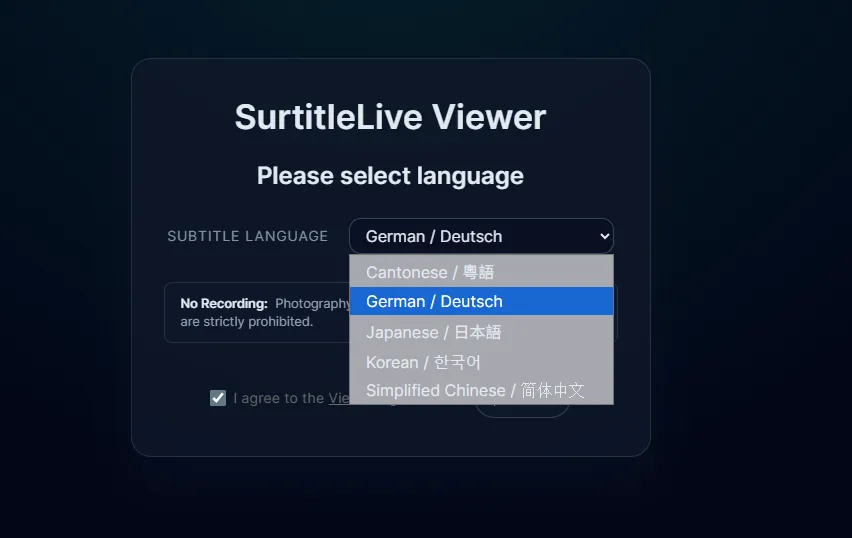
Instead of making one public screen carry every language, each audience member can choose the language they need on their own device. English-speaking audiences read English. Original-language audiences can choose the original text if it is provided. Invited guests or partner venues can follow another prepared language when the company supports it.
The work remains one live performance.
The routes into it can multiply—when the production has prepared, reviewed, and enabled those languages.
Technology should become quiet
A humanistic position still needs a workable stage workflow.
Fringe teams do not have unlimited technical time. A venue may not have a good place for a screen. A touring company may not control the projector. A small team may have one person operating sound, lights, and surtitles. The script may still be changing close to opening.
That is why language hospitality cannot remain an abstract belief. It has to become a workflow.
| Production pressure | SurtitleLive belief |
|---|---|
| The venue may not support a screen. | The work should not be redesigned around one display method. |
| Different audiences may need different language routes. | One performance can support multiple ways in. |
| The show may change live. | Surtitles should follow the performance, not force playback. |
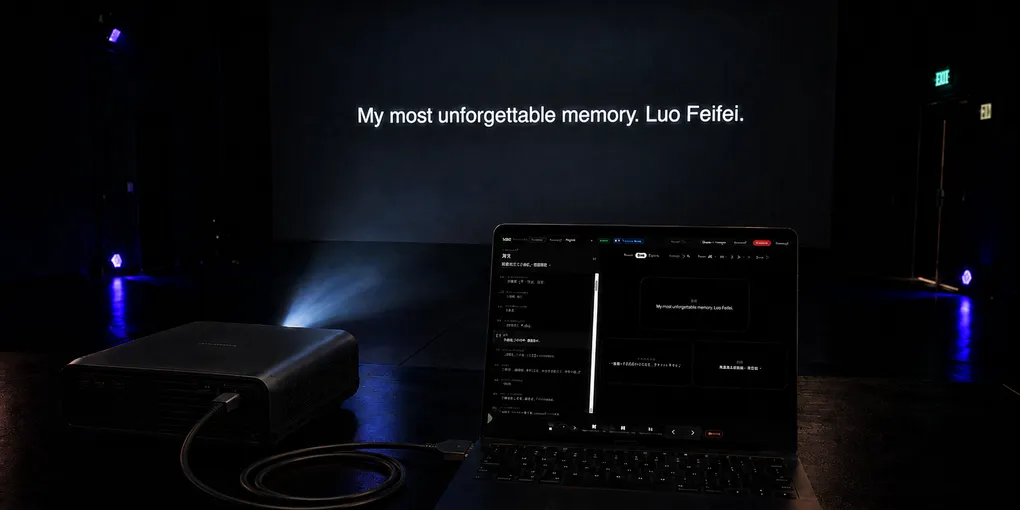
SurtitleLive is designed around that idea: prepare the text before performance, review the language choices, cue the surtitles live, and deliver them through mobile viewers, Projection Mode, or both.
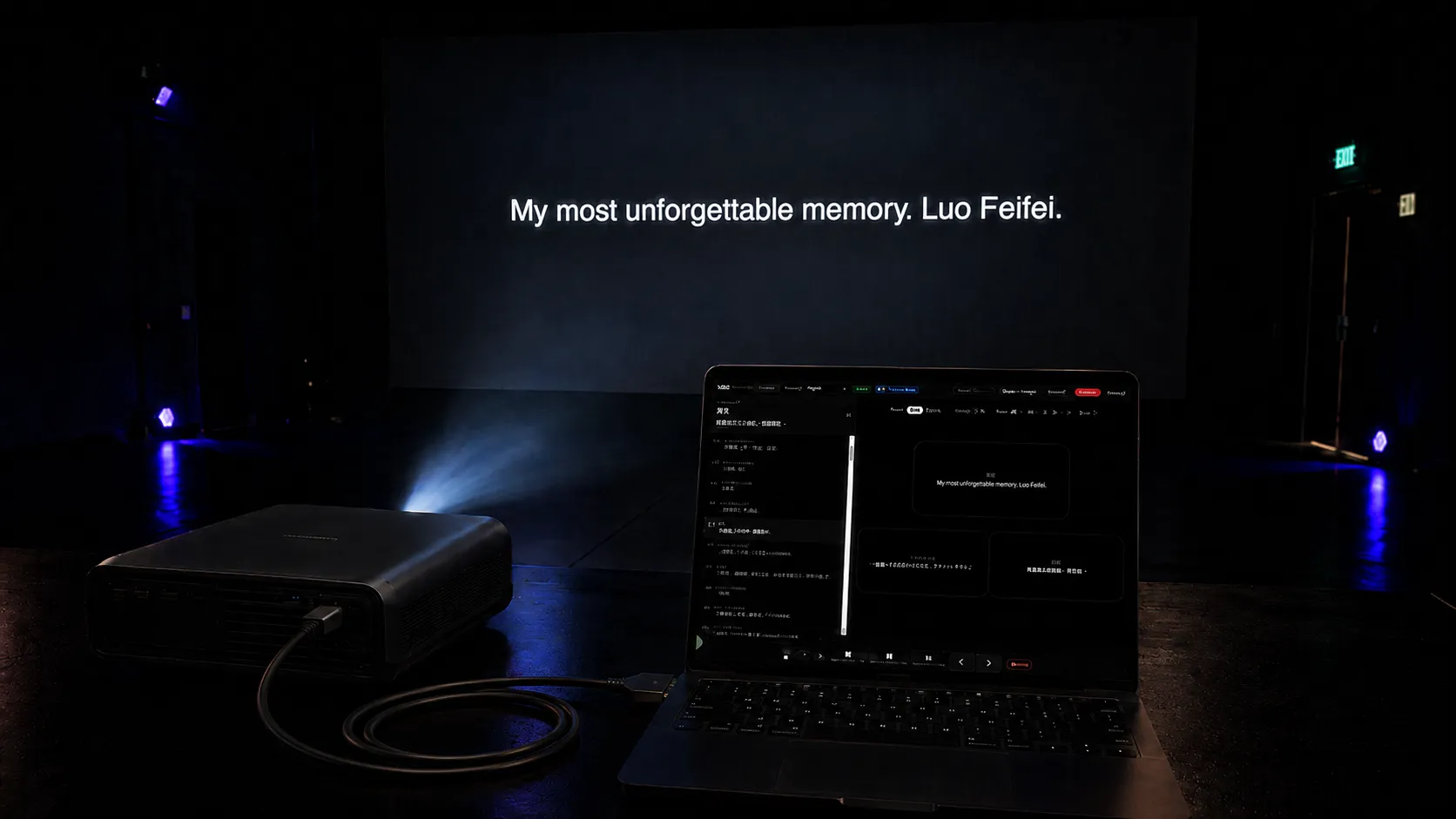
A company can use projection when the room supports it, while also giving audience members a phone-based language option. The same performance can remain one shared event without forcing every audience member into the same reading route.
But a phone is not a neutral answer for everyone. Some audience members may not have a suitable device, may find a small screen tiring, or may prefer not to divide their attention. A venue may have a phone policy or unreliable connectivity. Projection can provide a shared focal point; mobile viewing can provide individual language choice. Hospitality means choosing deliberately, explaining the route before booking, and preparing another way in when the primary route is unsuitable.
The point is not to make theatre more technical.
The point is to make language support easier to carry from room to room, so the company can focus on the work rather than rebuilding a subtitle system for every venue.
Live cueing is respect for the live event
Many companies start with slides because slides are familiar. For a short, simple, linear performance, that can work.
But live performance does not always move like a presentation.
An actor pauses longer than expected. A line is cut. A cue comes early. A scene jumps. The director adjusts a section after rehearsal. Suddenly the subtitle file is not only a display document; it is the translation source, cue list, operator interface, and emergency recovery tool.
That is too much weight for a slide deck.
For non-English work, the risk is not only technical embarrassment. It is audience trust. If the surtitles fall behind, reveal too much, or disappear at the wrong moment, the audience stops feeling invited and starts feeling lost.
Prepared surtitles still need a human operator because theatre is not playback.
The operator listens, watches, advances cues, holds back when needed, and recovers when the performance breathes differently from rehearsal.
This is not a failure of automation.
It is respect for the live event.
Audience growth follows from care
It is easy to begin with a marketing question: how can a Fringe company get a bigger audience?
That question still matters. A fuller room matters. Ticket sales matter. Discovery matters. Reviewers and programmers matter. At a festival with thousands of shows, practical visibility is not optional.
But for non-English work, audience growth should not be framed as a trick.
It is a result of care.
When you make the language route clear, more people can feel able to choose your show. When you say in the listing that English surtitles are available, people who were unsure can buy with confidence. When you let different audience members choose from the languages the production has genuinely prepared, you stop treating multilingual audiences as a technical inconvenience.
This can contribute to access, but translation alone is not a complete accessibility service.
It is not only marketing, though marketing benefits from it.
It is language hospitality: designing the journey so more people can meet the work without asking the work to become less itself.
That is the idea behind SurtitleLive.
We want stories to move beyond the limits of language without losing the language they came from.
For a step-by-step guide to the practical setup, read How to Add English Surtitles to a Non-English Show at the Edinburgh Fringe Festival.
Build a workflow where translation supports the performance
Sources
- History of the Fringe, Edinburgh Festival Fringe
- Getting started as an artist, Edinburgh Festival Fringe
- How to start making your show accessible, Edinburgh Festival Fringe
Key Takeaways
- Translation can welcome audiences into a performance without replacing the language, rhythm, and cultural memory that formed it.
- A responsible translator needs context, rehearsal time, authority to question the text, and clear credit—not a last-minute approval task.
- Per-device language choice can widen the routes into one performance, but phones are not a neutral or universal access answer.
- Describe translated surtitles and accessibility captions precisely so audiences know what information and delivery route they will receive.
FAQ
What does translation as hospitality mean in theatre?
It means giving audiences a usable route into a work while allowing its original language and artistic voice to remain alive on stage.
Why should a translator be involved beyond final proofreading?
Performance translation needs context, artistic dialogue, rehearsal, authority, and accountability. Those conditions let the translator shape text that belongs to the production.
Does mobile language choice work for every audience?
No. It can offer individual language choice, but device access, screen size, attention, venue policy, connectivity, and audience preference must be considered.
Are translated surtitles a complete accessibility service?
Not automatically. Accessibility captions may also need speaker information, sound effects, music, and off-stage sound. The production should describe the service precisely.
Glossary
- Translation as hospitality: Designing translation as an invitation into a work, not as a replacement for its original language.
- Original voice: The rhythm, register, timing, relationships, and cultural memory carried by the language in which a performance was made.
- Language route: A prepared way for an audience member to follow a performance, such as English surtitles or another reviewed language track.
- Per-device language choice: A delivery model in which audience members select from enabled languages on their own browser-based viewer.
- Live cueing: A human operator's work of advancing, holding, hiding, or recovering prepared text in time with a live performance.